
PowerTrack Africa -> Fleet Telematics Intelligence Dashboard
This Power BI solution was designed to help PowerTrack Africa convert telematics data into practical fleet intelligence by combining executive KPIs, vehicle-level analysis, and risk-based prioritization into a single decision-focused reporting experience.
DATA ANALYTICS
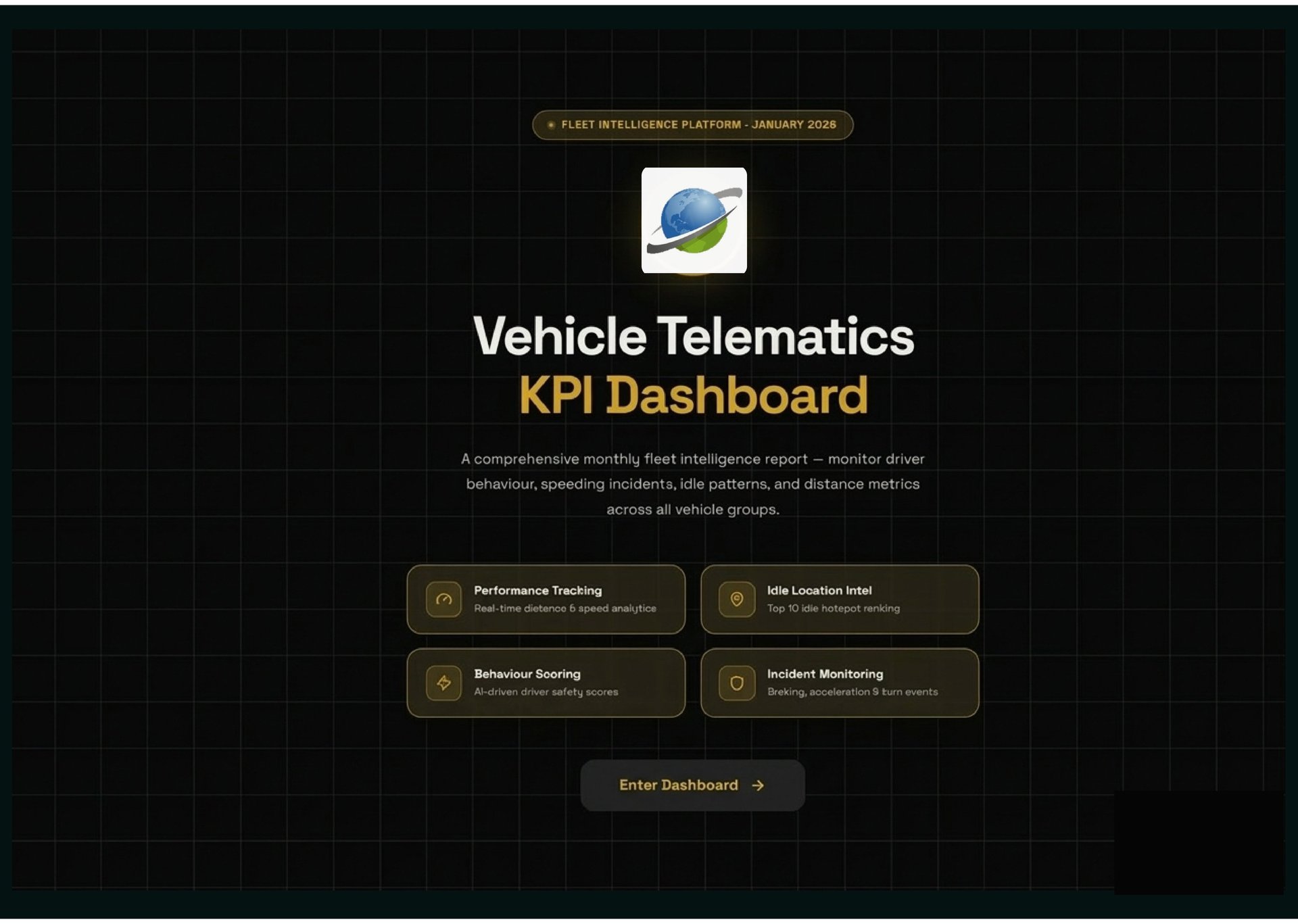
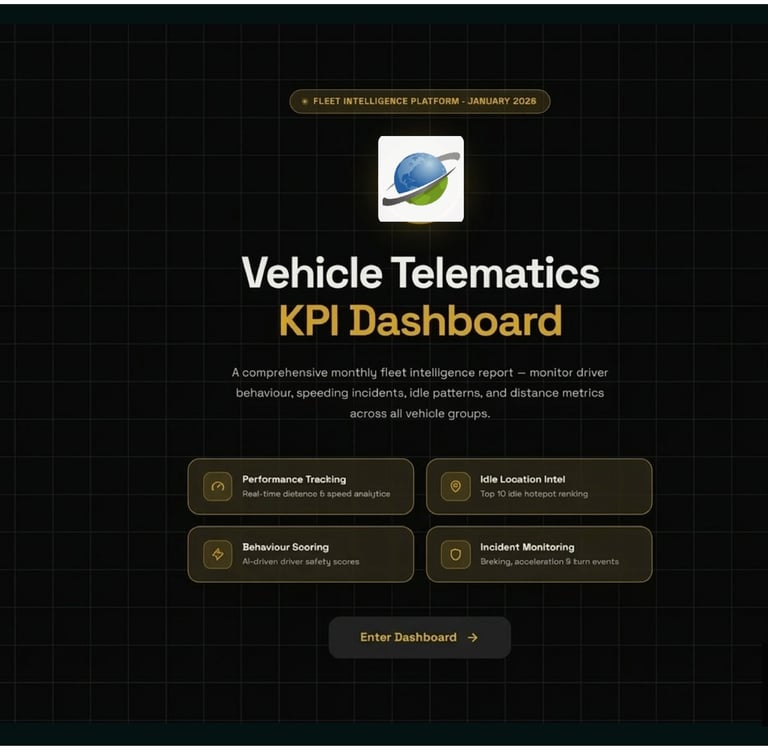
I partnered with PowerTrack Africa, a fleet management and telematics solutions provider operating in DR Congo, to design and deliver a Power BI Vehicle Telematics KPI Dashboard tailored to fleet intelligence and driver performance monitoring. PowerTrack’s business revolves around GPS tracking, fleet visibility, driver behaviour management, and analytics-driven decision-making, so the reporting solution had to do more than display raw telematics data it needed to convert operational movement into actionable business insight
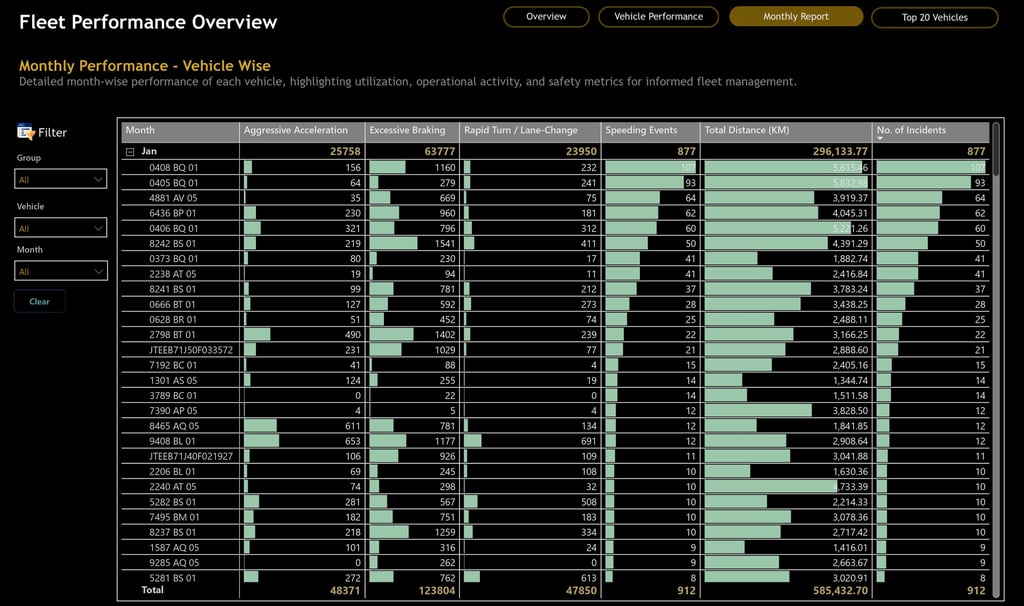
The monthly report page was designed for deeper operational analysis at the individual vehicle level. Instead of stopping at high-level KPIs, this view breaks down each vehicle’s monthly performance across critical telematics indicators including aggressive acceleration, excessive braking, rapid turns/lane changes, speeding events, total distance covered, and total incidents. This structure allows the client to move from general monitoring to targeted investigation, making it easier to compare vehicles, detect unsafe driving patterns, and identify units that may require operational attention or coaching. It turns the dashboard from a reporting tool into a management tool by helping the business pinpoint exactly which vehicles are driving performance issues within the fleet
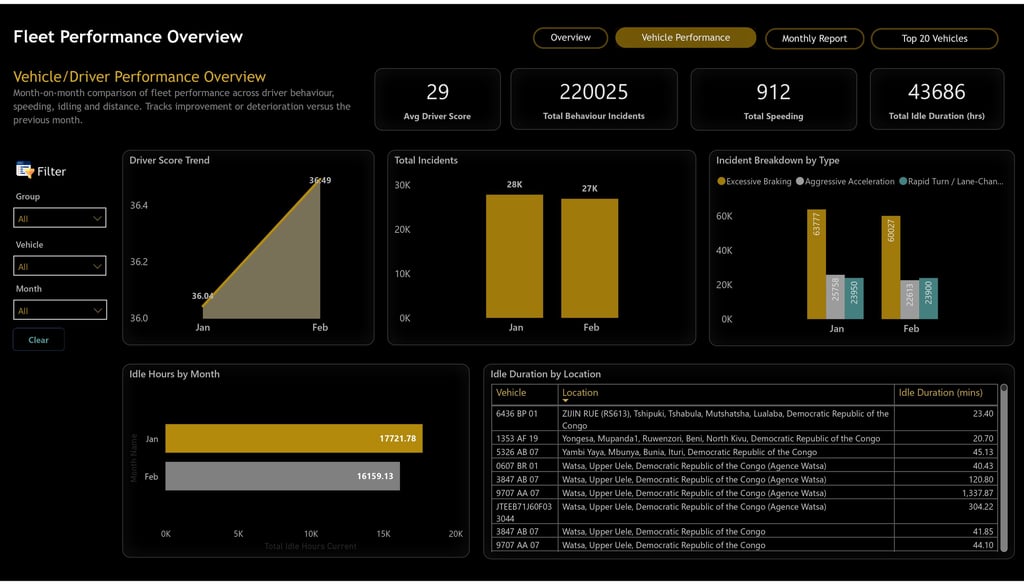
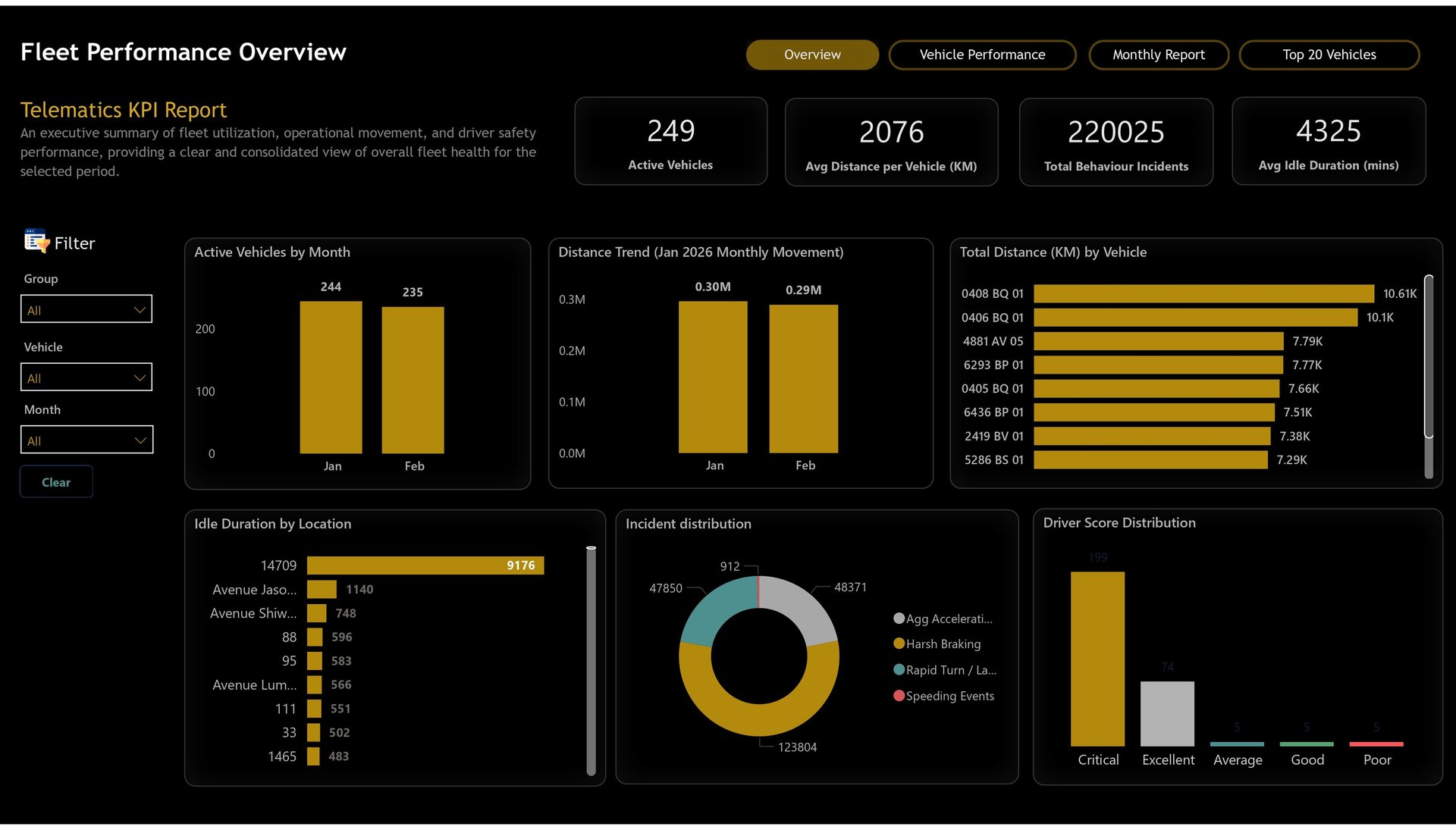
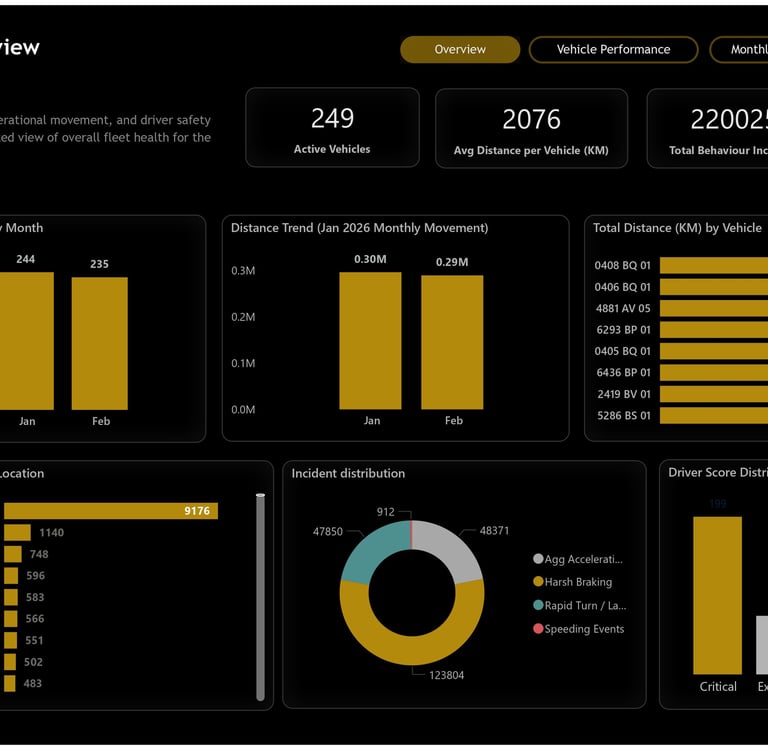
The executive overview page was built to help management quickly assess the overall health of the fleet through a combination of headline KPIs and visual summaries. This page highlights active vehicles, average distance per vehicle, total behaviour incidents, and total idle duration, giving leadership an instant understanding of utilization, movement, and operational risk. It also brings together supporting visuals for distance trends, top vehicles by distance covered, idle duration by location, incident distribution, and driver score distribution, making it easier to identify where inefficiencies and safety concerns are concentrated. In January 2026 alone, the dashboard summarized 286 active vehicles, 1,035 average distance per vehicle, 113,485 total behaviour incidents, and 146,027 total idle minutes, creating a compact but highly actionable operational snapshot.
Executive Overview
Monthly Report (Vehicle-Wise Performance)
Top 20 Vehicles by Incidents per 100 KM
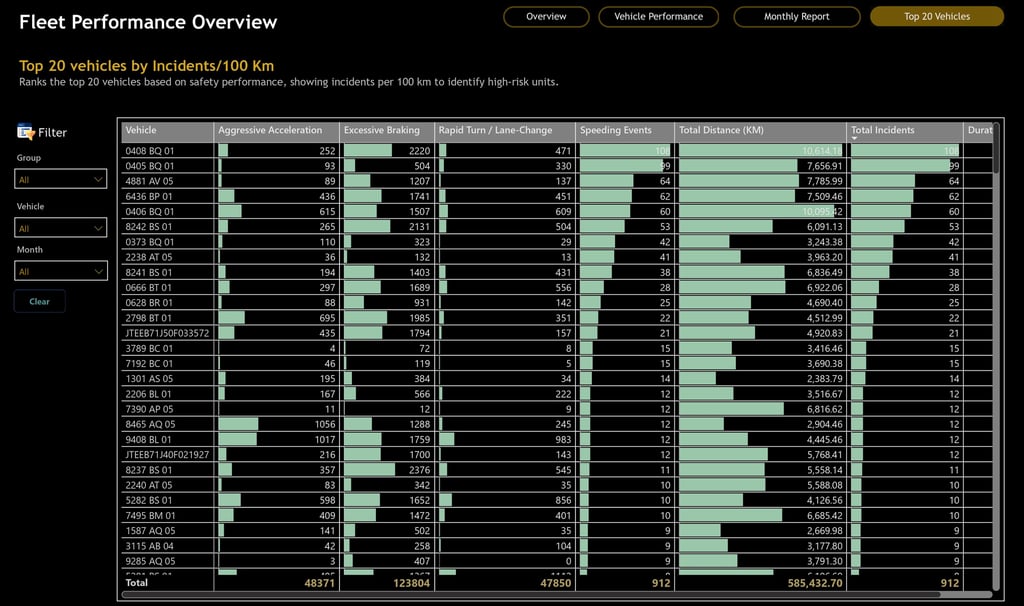
The final page focuses on prioritization and intervention. I designed this view to rank the top 20 vehicles based on incidents per 100 kilometres, which creates a much more meaningful performance benchmark than simply looking at raw incident counts. This is important because high-distance vehicles naturally generate more activity, so a normalized metric gives management a fairer way to identify genuinely high-risk units. By combining this ranking with the underlying behaviour indicators and distance metrics, the page helps the client quickly isolate vehicles that may be underperforming from a safety standpoint and supports more informed decisions around driver monitoring, coaching, and operational control.
Monthly Vehicle Performance Analysis
This page was designed to give fleet management teams a detailed, vehicle-level view of monthly operational and safety performance, moving beyond top-line KPIs into the specific activity patterns that shape fleet efficiency and risk. The report tracks key telematics indicators such as aggressive acceleration, excessive braking, rapid turns or lane changes, speeding events, total distance covered, and total number of incidents for each vehicle, allowing stakeholders to compare units in a structured and highly actionable way. By presenting the data at this level of detail, the dashboard helps management quickly identify which vehicles are contributing most to unsafe driving behaviour, which ones are covering higher operational distance, and where intervention may be needed. This makes the page valuable not just as a reporting layer, but as a practical management tool that supports driver coaching, safety monitoring, and operational review. The inclusion of filters for group, vehicle, and month adds another layer of analytical flexibility, enabling users to isolate specific segments of the fleet and perform more focused investigation. Overall, this page transforms raw telematics data into a decision-ready performance view that strengthens visibility, accountability, and control across fleet operations.
Location
Karachi, Pakistan
Contacts
+92 336-2349646
ammarullahkhan5@gmail.com
Expertise
Transforming data into impactful stories for my clients